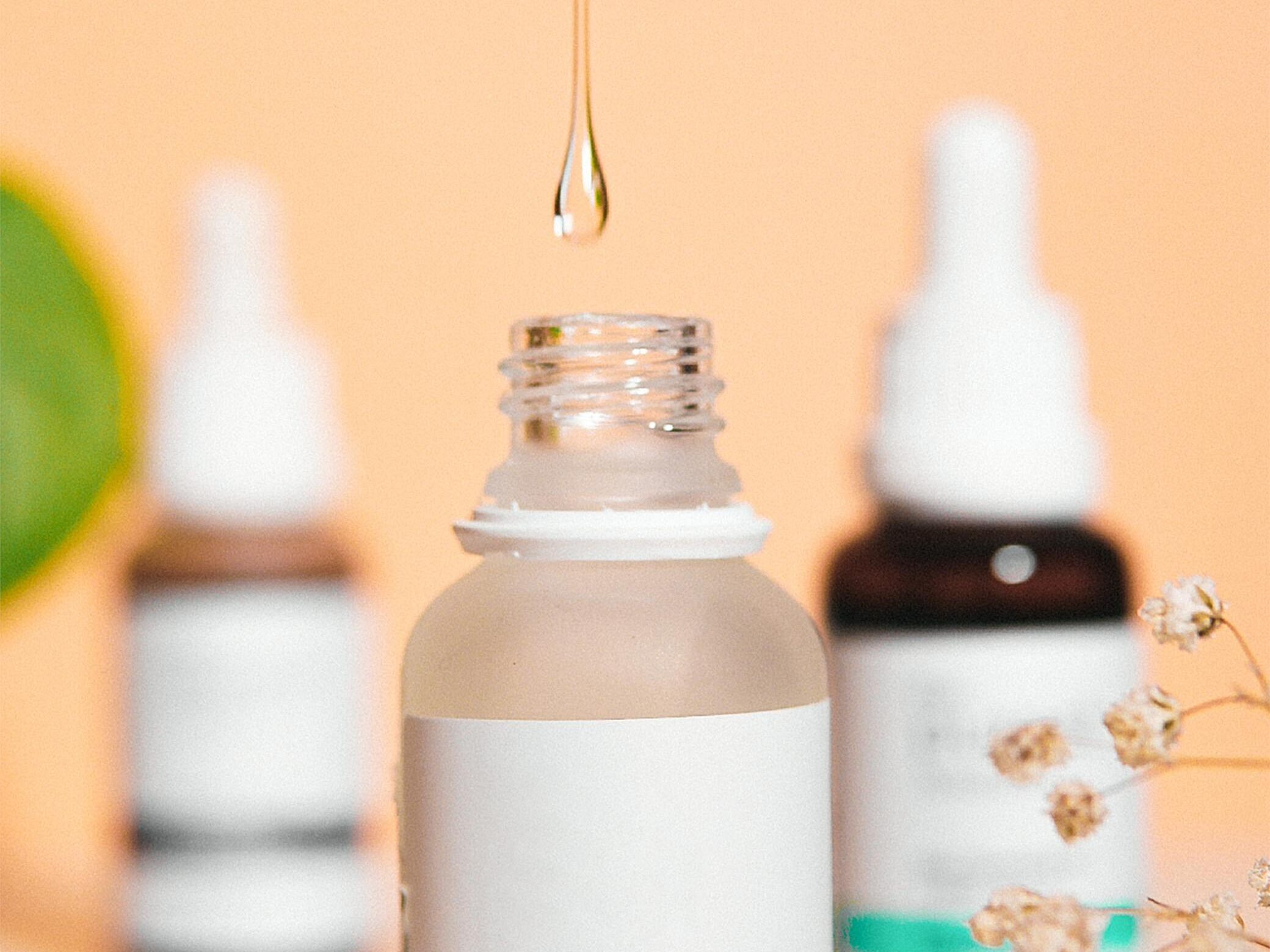
If there’s one ingredient that actually has the receipts, it’s this one
Ask any board-certified dermatologist what the single most evidence-backed topical anti-aging ingredient is, and nearly all of them will say the same thing: a retinoid. Not a peptide, not a growth factor, not a vitamin C serum, though those all have their place. Retinoids have decades of clinical research behind them, and they work at a level most skincare ingredients don’t even reach: directly influencing how your skin cells behave.
But here’s where it gets confusing. Walk into any beauty store and you’ll see retinol on half the shelves. Google “best retinoid” and you’ll hit a wall of opinions about tretinoin, retinal, retinyl palmitate, and a handful of synthetic options you’ve probably never heard of. They’re all called retinoids, and they are not the same thing.
What retinoids actually do to your skin
All retinoids are derivatives of vitamin A, and they all work toward the same biological goal, but through different routes and at different speeds.
When a retinoid is absorbed into skin, it eventually converts to retinoic acid, the biologically active form that binds to receptors inside your skin cells and essentially tells them what to do. The instructions it sends are impressive:
- Speed up cell turnover: pushing out dull, damaged surface cells faster
- Stimulate fibroblasts to produce more collagen and elastin
- Inhibit the enzymes that break collagen down
- Improve communication between the epidermal and dermal layers
- Reduce hyperpigmentation by regulating melanin production
The net result, with consistent use: smoother texture, finer lines, firmer skin, and more even tone. Not overnight, but measurably. One landmark study found that treating photodamaged skin with tretinoin for 10–12 months produced an 80% increase in collagen I formation, compared to a 14% decrease in the untreated group. That number has held up across decades of research. Retinoids genuinely rebuild what aging takes away.
The retinoid ladder: from gentle to powerful
Not all retinoids are equally potent, because not all of them arrive at retinoic acid in the same number of steps. The more conversion steps required, the gentler and slower the effect, but also the less irritating.
Think of it like a relay race. Retinoic acid (tretinoin) is already at the finish line. Everything else has to run to get there — and the more legs of the race, the longer it takes but the lower the chance of irritation.
Retinyl esters (retinyl palmitate, retinyl acetate) are the mildest option, requiring three conversion steps. They’re well-tolerated by virtually everyone but deliver modest results — fine for absolute beginners or very reactive skin, but not a long-term age reversal strategy.
Retinol is the OTC workhorse, two steps from active. It’s well-studied, widely available, and effective for most people when used consistently, with meaningful improvements in texture and tone typically visible within 8–12 weeks. One caveat: it degrades quickly in light and air, so formulation and packaging matter.
Retinal (retinaldehyde) sits just one step from active, making it the most potent retinoid available without a prescription — roughly 10x more bioavailable than retinol. It’s also better tolerated than tretinoin, which makes it a genuinely compelling option for those who want stronger results but find prescription-strength too harsh. A 2024 clinical trial on 32 women — 57% with sensitive skin — found significant improvements in fine lines, pigmentation, and pore appearance after 8 weeks, with zero signs of irritation. For many people, retinal is the sweet spot.
Tretinoin is the biologically active form — no conversion needed, prescription-only in most markets, and the benchmark against which everything else is measured. Results are the most dramatic and fastest, but so is the potential for initial irritation. Redness, peeling, and dryness in the first weeks are common. Most side effects resolve within 4–8 weeks as skin adapts, and lower concentrations (0.025%–0.05%) deliver most of the anti-aging benefit with considerably less disruption.
So which one is right for you?
This isn’t one-size-fits-all, but here’s a practical framework:
| If you are… | Start with… |
|---|---|
| New to retinoids, any skin type | Retinol 0.025%–0.05% |
| Retinoid-experienced, want stronger OTC results | Retinal 0.05%–0.1% |
| Sensitive skin, want retinoid benefits with less risk | Retinal (better tolerated than tretinoin) |
| 40s or 50s, want the fastest, deepest results | Tretinoin 0.025%–0.05% (with dermatologist guidance) |
| Very sensitive or rosacea-prone | Retinyl esters or encapsulated retinol to start |
One note: if you’re considering tretinoin, a dermatologist consultation is worth it. Not because it’s dangerous, but because getting the concentration, formulation, and introduction protocol right dramatically increases your chance of actually sticking with it.
How to start
Retinoid irritation is real, but it’s almost entirely avoidable if you introduce the ingredient correctly.
The sandwich method: Apply a thin layer of moisturizer first, then your retinoid, then another light layer of moisturizer on top. This buffers penetration speed and cuts early-stage irritation significantly.
Start slow: Two to three nights per week is plenty to start. Every night is too much for most beginners and increases the chance of irritation without adding proportional benefit.
Dry skin only: Apply retinoids to completely dry skin. Damp skin enhances absorption, and at this stage that means more irritation.
Always wear SPF the next morning: Retinoids increase UV sensitivity, so skipping SPF while using them actively undermines both safety and results.
Don’t mix on the same night: Avoid using AHAs, BHAs, vitamin C, or benzoyl peroxide on the same application night as your retinoid until your skin has fully adjusted.
Expect a timeline, not a miracle: Texture and tone improvements typically appear within 6–8 weeks. Line reduction takes 3–6 months. Collagen-level changes take 6–12 months of consistent use. The people who don’t see results from retinoids are almost always the ones who gave up before the compound effect kicked in.
What about the newer synthetic retinoids?
Worth a brief mention. Adapalene (available OTC as Differin) is a third-generation synthetic retinoid originally developed for acne that also has anti-aging data behind it, and is particularly well-tolerated — a solid option for acne-prone skin dealing with aging simultaneously.
Tazarotene is a prescription-strength synthetic retinoid that’s more potent than tretinoin in some studies but also more irritating. Generally reserved for specific dermatological conditions rather than routine anti-aging use.
For most people reading this, the retinol → retinal → tretinoin spectrum covers everything they’ll ever need.
Conclusion
Retinoids are the most evidence-backed topical category in anti-aging skincare. The question isn’t whether to use one, but which one makes sense for your skin right now. Retinol is the reliable starting point. Retinal is the underrated middle ground — more potent than retinol, better tolerated than tretinoin. Tretinoin is the gold standard for those ready for it. Start where your skin is, not where you think you should be, and give it enough time to actually work.
Sources
- “Retinoids: The Gold Standard for Anti-Aging.” https://www.mdlinx.com/article/retinoids-the-gold-standard-for-anti-aging/6dI9RSJ3EBow1GEgqhgv8Q
- “What’s the difference between retinaldehyde, retinol and tretinoin?” https://fr.medik8.com/en/pages/difference-between-retinaldehyde-retinol-and-tretinoin
- “Restoration of collagen formation in photodamaged human skin by tretinoin (retinoic acid).” https://pubmed.ncbi.nlm.nih.gov/8336752/
- “Does retinol deserve the hype? A Stanford dermatologist weighs in.” https://med.stanford.edu/news/insights/2020/08/does-retinol-deserve-the-hype-a-stanford-dermatologist-weighs-in.html
- “Human Skin Aging and the Anti-Aging Properties of Retinol.” https://pmc.ncbi.nlm.nih.gov/articles/PMC10669284/
- “The Clinical Efficacy and Tolerability of a Novel Retinaldehyde Serum with Firming Peptides to Improve Skin Texture and Signs of Photoaging.” https://pubmed.ncbi.nlm.nih.gov/39496127/
- Enhancing Facial Rejuvenation Outcomes With a Novel Retinaldehyde-Based Cream. https://pmc.ncbi.nlm.nih.gov/articles/PMC12661472/
- “Study Shows Tretinoin Top Choice for Anti-aging.” https://www.wederm.com/blog/study-shows-tretinoin-top-choice-for-anti-aging/