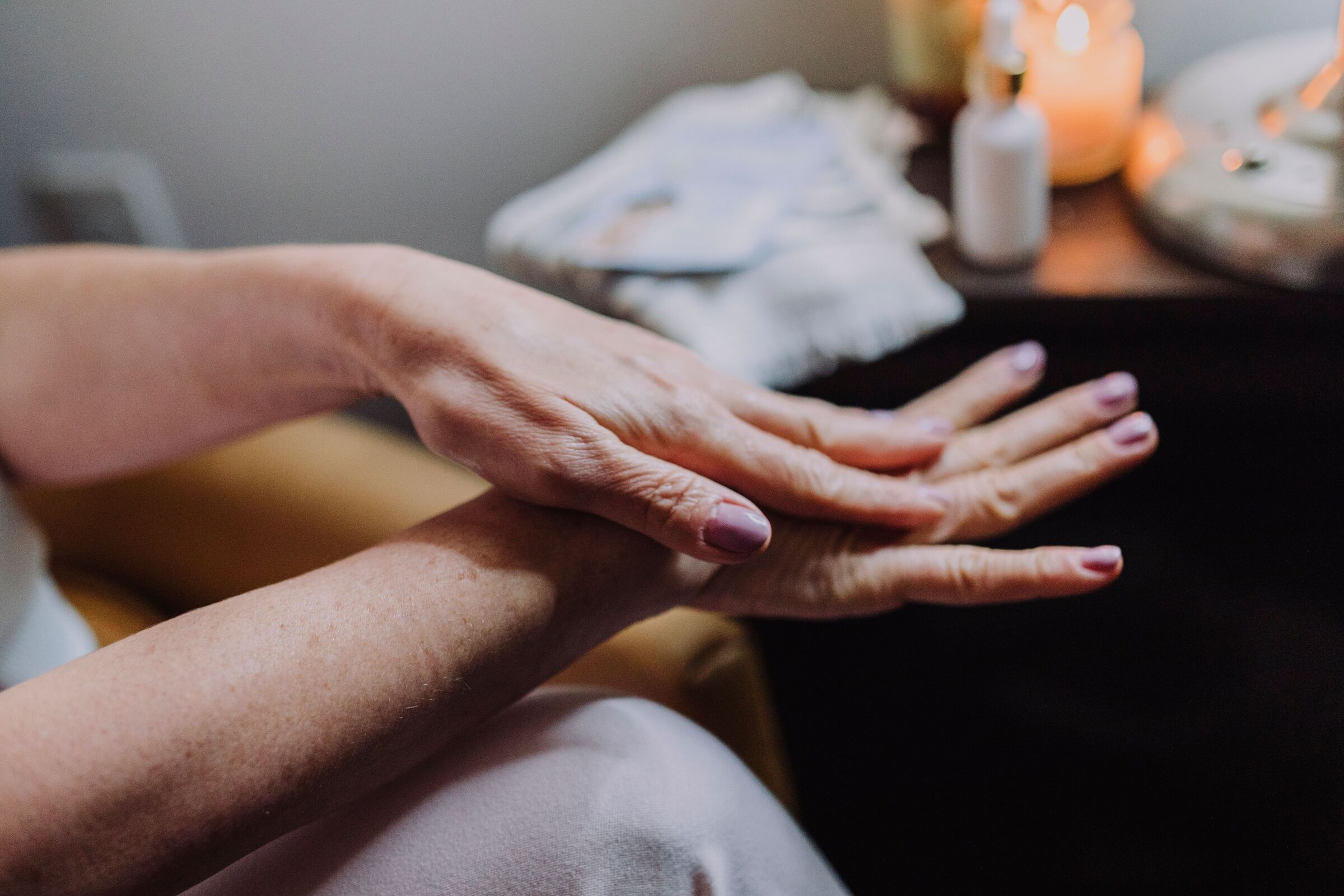
There is a point where skin dryness starts to feel different. It is not just a little winter tightness or the occasional flaky patch. The skin can start feeling thinner, rougher, more reactive, and somehow less able to bounce back, even when you are using products that used to work just fine.
That shift is not in your head. Aging changes the way skin holds water, produces oil, and repairs its barrier, so dryness becomes less of a short term annoyance and more of a structural issue. The good news is that once you understand what is actually changing, the fix becomes much more practical.
Dry skin vs. dehydrated skin
When people say their skin is dry, they are often describing two related but different problems.
| Dry skin | Dehydrated skin | |
|---|---|---|
| What it means | Not enough oil or protective surface lipids | Not enough water, or water escaping too quickly |
| How it feels | Rough, flaky, tight | Dull, tight, sometimes oily on top yet still uncomfortable |
| What drives it | Lower sebum production, weaker surface protection | Barrier disruption, poor water retention in the stratum corneum |
A lot of aging skin has both problems at once, which is why it can feel tight and rough while also looking dull or crepey. This distinction matters practically. A richer cream will not fix everything if the barrier itself is not functioning well, because water still escapes too easily even when the surface feels coated.
What actually changes as skin ages
Age related dryness is not one single switch flipping off. It is a handful of small biological shifts compounding over time.
The barrier becomes less efficient
Your skin barrier is the outer layer that keeps water in and irritants out. It relies on a well organized structure of skin cells, ceramides, cholesterol, and fatty acids working together, much like mortar between bricks. With age, that structure becomes less resilient:
- Lipid organization and compactness decline in some areas of the body
- Barrier recovery slows down after the skin is stressed or disrupted
- Sensitivity increases because the skin has a harder time bouncing back after irritation, over-cleansing, or exposure to dry air
This is part of why older skin can suddenly feel reactive. It is not only drier. It is also less forgiving.
Oil production drops
Sebum helps lubricate the skin’s surface and slows down water loss. Research shows sebaceous secretion gradually decreases with age, especially after menopause, and a clinical study of 150 women found sebum production dropped significantly with age, with the lowest surface lipid levels found in the oldest group studied.
Water holding capacity shifts
Healthy skin needs to hold onto water, not just prevent it from escaping. This depends partly on natural moisturizing factor, or NMF, a mix of water binding compounds in the stratum corneum. Research shows that chronological aging and long term environmental exposure alter both stratum corneum water content and NMF composition, which may explain why older skin often feels less supple even with a consistent routine.
Hormones and inflammation add to the load
As estrogen declines around perimenopause and menopause, skin often becomes drier, thinner, and slower to repair. At the same time, aging skin is more vulnerable to low grade inflammation and epidermal dysfunction, both of which can worsen dryness and increase overall sensitivity.
Why a thicker cream is not always the fix
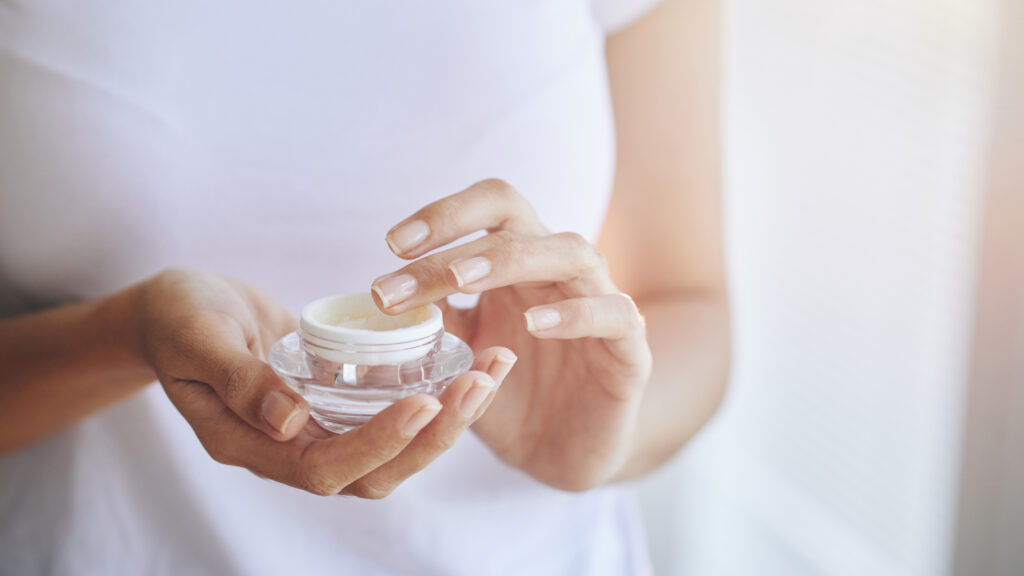
A lot of people notice dryness and reach straight for a heavier moisturizer. The relief is often short lived.
That happens because age related dryness usually involves three overlapping issues at once, not just a shortage of product:
- A weaker barrier that lets water escape too easily
- Lower surface lipids that leave less natural protection in place
- Reduced water retention inside the stratum corneum itself
A heavy cream can coat the surface and feel good temporarily, but if it does not help rebuild barrier lipids or support internal hydration, skin often goes back to feeling tight within hours. Common habits make this worse too. Over-cleansing, hot water, frequent exfoliation, and strong actives all place extra stress on a barrier that already recovers more slowly with age.
What actually helps
The goal is straightforward: help skin hold water better, replace missing lipids, and stop the habits that keep disrupting the barrier.
A few habits are worth adjusting as well:
- Keep showers warm rather than hot, since heat strips surface lipids
- Use a humidifier in dry indoor air, especially in winter
- Avoid daily strong exfoliation if skin already feels reactive
- Introduce new actives one at a time so the barrier has time to adjust
When dryness signals something else
Persistent, severe, or sudden dryness is not always simply age related. It is worth paying attention if dryness comes with intense itching, is difficult to control, or shows up alongside other symptoms.
Common contributing factors include:
- Eczema or other inflammatory skin conditions
- Certain medications, including some acne and blood pressure treatments
- Hormonal shifts during perimenopause and menopause
- Overuse of active ingredients like retinoids or exfoliating acids
In these cases, a dermatologist can help identify whether something beyond normal aging is contributing to the problem.
The bigger picture
Aging skin is not being difficult without reason. It simply has fewer built in supports than it used to, from oil production to internal water retention to barrier repair speed. Once a routine starts replacing those supports directly, rather than just adding more moisturizer on top, skin usually feels calmer, softer, and noticeably more comfortable within a short period of time.
Sources
- “Age-related changes in skin barrier function: quantitative evaluation of 150 female subjects.” https://pubmed.ncbi.nlm.nih.gov/23113564/
- “Age-dependent changes in stratum corneum barrier function.” https://onlinelibrary.wiley.com/doi/10.1111/srt.12132
- “Transepidermal water loss in young and aged healthy humans: a systematic review and meta-analysis.” https://pubmed.ncbi.nlm.nih.gov/23341028/
- “Age-related changes in sebaceous gland activity.” https://pubmed.ncbi.nlm.nih.gov/448169/
- “Clinical significance of the water retention and barrier function-improving capabilities of ceramide-containing formulations: A qualitative review.” https://onlinelibrary.wiley.com/doi/10.1111/1346-8138.16175
- “The stratum corneum water content and natural moisturization factor composition evolve with age and depend on body site.” https://onlinelibrary.wiley.com/doi/abs/10.1111/ijd.15417