
Ozempic face refers to facial hollowing, volume loss, and sagging that shows up after fast weight loss on GLP-1 medications like semaglutide and tirzepatide. It’s well documented enough now to appear in peer-reviewed plastic surgery and dermatology journals, not just social media commentary.
Millions of people are currently using these drugs, and the mechanism behind them starts with hormones. GLP-1 medications work by mimicking glucagon-like peptide-1, a hormone the gut releases naturally after eating to regulate insulin, slow digestion, and reduce appetite. That hormonal effect is what drives the weight loss. What shows up on the face afterward is a separate chain of events involving fat, collagen, and skin, set in motion by how much weight comes off and how quickly.
This article breaks down why the face changes the way it does, what part is tied to the drug versus the pace of weight loss, and what can be done to reduce the visible effects.
Why the face changes faster than the rest of the body
Facial skin has less support behind it than most people realize. Small, structurally important fat pads sit under the skin in the cheeks, temples, and around the eyes, and they help keep the face looking full. When weight loss happens quickly, these pads shrink along with fat elsewhere in the body.
A 2025 imaging study using CT and MRI scans found that patients on GLP-1 medications lost roughly 7% of midfacial volume for every 10 kilograms (about 22 pounds) of total weight lost, with most of that loss concentrated in the superficial fat pads. Because these pads sit close to the surface, even modest reductions can noticeably change how the face looks.
There’s also a hormonal layer to this that gets less attention. The fat found underneath skin, known as dermal white adipose tissue, does more than take up space. It plays a role in skin hydration and elasticity. Losing that tissue quickly can leave skin drier and looser than volume loss alone would explain, since the tissue’s supportive function disappears along with its bulk.
Speed, not the specific drug, drives most of the change
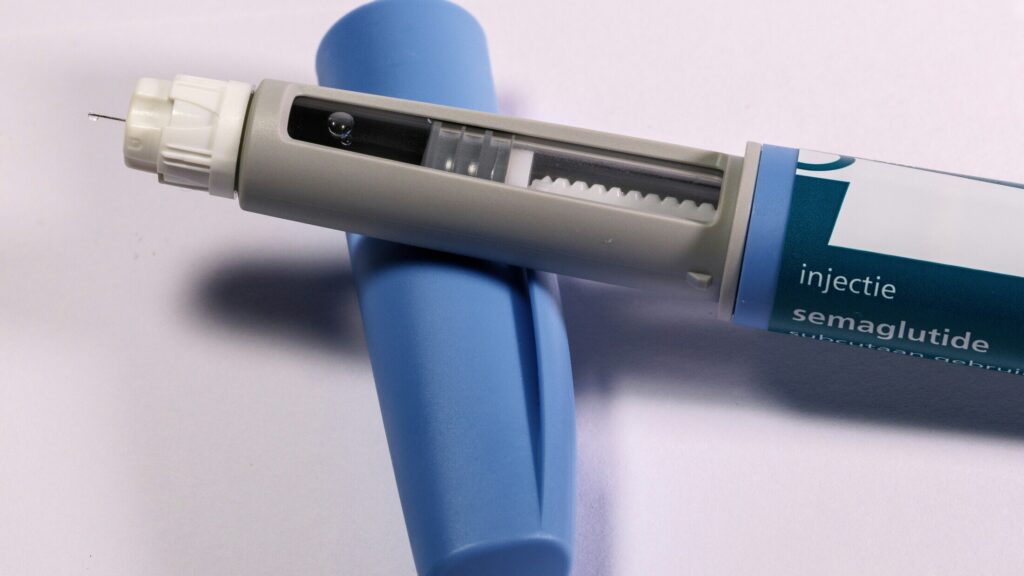
One of the more important findings across recent research is that this isn’t really about semaglutide or tirzepatide as chemical compounds. It’s about how much and how fast someone loses weight.
Similar facial changes have been documented for decades after bariatric surgery and other rapid weight loss methods, long before GLP-1 medications existed. The skin and its underlying support structures need time to adjust when volume disappears. Fast weight loss compresses that adjustment period, so the skin doesn’t have the chance to gradually contract and re-drape the way it might after a slower loss.
| Factor | Slower weight loss | Rapid weight loss |
|---|---|---|
| Time for skin to adapt | More gradual, allows some retraction | Compressed, less time to adjust |
| Facial fat pad depletion | Occurs more slowly | Can be significant within months |
| Collagen support | More time to compensate | Existing decline is outpaced |
| Visible sagging risk | Lower | Higher, especially with larger total loss |
Muscle loss adds another layer
Facial and body sagging isn’t only about fat and skin. Some patients on GLP-1 medications lose meaningful lean muscle mass alongside fat. Since muscle also provides structural support under the skin, its loss compounds the appearance of sagging beyond what skin laxity alone would cause.
This matters beyond appearance too. Preserving muscle during weight loss supports long-term strength, metabolic health, and mobility, which is one reason many clinicians now recommend combining GLP-1 treatment with resistance training rather than relying on the medication alone.
What else shows up beyond the face
The facial changes tend to get the most attention, but a similar pattern can appear elsewhere in the body. Related effects reported with GLP-1 medications include:
- Loose or sagging skin on the arms, abdomen, and other areas where fat loss is significant
- Injection site reactions, including redness, swelling, or small nodules
- Hair shedding, often temporary, linked to the stress of rapid weight and nutrient changes
- Skin dryness or texture changes tied to reduced dietary intake and shifting nutrient levels
These are generally considered secondary to the pace of weight loss rather than unique side effects of the medication class itself.
What lowers the risk
The encouraging part of this research is that much of the visible change is manageable with a few practical adjustments.
- Aim for a gradual pace when possible. Slower weight loss gives skin and supporting tissue more time to adapt, which several clinicians point to as one of the most effective preventive steps.
- Prioritize protein and resistance training. Adequate protein intake paired with strength training helps preserve muscle mass, which supports both metabolic health and facial structure.
- Address volume support early. Dermatologists increasingly recommend starting biostimulator treatments, which encourage the body’s own collagen production, before major volume loss occurs rather than after. Early intervention tends to produce better results than trying to restore volume later.
- Stay attentive to nutrient intake. Since appetite suppression can reduce overall food intake, paying attention to protein, vitamins, and minerals helps support skin and hair health throughout treatment.
When to talk to a professional
Facial volume loss that affects quality of life, comes with pronounced skin laxity, or is accompanied by other concerning symptoms is worth discussing with a dermatologist or the prescribing physician. Combined treatment approaches using biostimulators and hyaluronic acid based fillers have shown positive results in recent clinical research for restoring facial volume in this specific patient population.
The bottom line
GLP-1 medications work through a real hormonal mechanism, mimicking a hormone the body already produces to manage appetite and blood sugar. What shows up in the mirror afterward has less to do with that hormone directly and more to do with how quickly fat pads, muscle, and skin adjust to a smaller body. The pattern is well documented and, for most people, manageable with a measured pace, attention to muscle and nutrition, and early support for skin structure when needed.
Sources
- “Radiographic Midfacial Volume Changes in Patients on GLP-1 Receptor Agonists.” https://pubmed.ncbi.nlm.nih.gov/40407186/
- “Experts Warn Rapid Weight Loss May Accelerate Facial Ageing and Skin Changes.” https://theaestheticsmagazine.com/experts-warn-rapid-weight-loss-may-accelerate-facial-ageing-and-skin-changes/
- “GLP-1-Induced Weight Loss and the Face: Anatomical Mechanisms and Treatment Approaches.” https://pubmed.ncbi.nlm.nih.gov/42210888/
- “‘Ozempic Face’ in Plastic Surgery: A Systematic Review of the Literature.”https://pmc.ncbi.nlm.nih.gov/articles/PMC12232544/
- “‘Ozempic Face’: What It Is and How to Avoid It.” https://health.clevelandclinic.org/ozempic-face
- “What Is Ozempic Face?” https://www.webmd.com/obesity/what-is-ozempic-face
- “Multicenter, Open-Label Study of Combined Poly-L-Lactic Acid and Hyaluronic Acid Filler for GLP-1 Associated Facial Volume Loss.” https://academic.oup.com/asj/article/46/5/509/8324868


Hi,
Great explanation of how rapid weight loss can affect facial appearance. I experienced similar concerns while researching GLP-1 treatments, and I also found https://glp-1pills.com to be a helpful resource for learning about weight-loss medications and practical tips. Thanks for sharing such an informative and balanced article!