Dermatologists increasingly point to a connection that has little to do with skincare products: the relationship between gut bacteria and skin health, often called the gut-skin axis. This isn’t a fringe wellness idea. It’s an active area of published research examining how the trillions of microbes living in the digestive tract influence inflammation, barrier function, and the visible condition of skin.
The gut and skin have more in common structurally than most people assume. Both are large surfaces that interact constantly with the outside world, and both depend on a balanced population of microbes to stay healthy. When that balance shifts in the gut, the effects don’t stay contained there.
This article covers what the research actually shows, where the evidence is strong, where it’s still developing, and what that means for everyday food choices.
What the gut-skin axis actually is
The gut-skin axis describes a two-way signaling relationship between the gastrointestinal tract and the skin. Communication flows in both directions: gut microbes influence immune activity and inflammation throughout the body, and that inflammation shows up in skin tissue, while skin conditions can, in some cases, reflect back on gut health as well.
A few things drive this connection:
- Shared barrier function. Both the gut lining and the skin barrier rely on tight cellular junctions to keep out harmful substances while letting beneficial ones through.
- Immune system overlap. A large portion of the body’s immune activity is coordinated through gut-associated tissue, which means gut microbial balance has an outsized influence on systemic inflammation.
- Microbial metabolites. Bacteria in the gut produce byproducts that circulate throughout the body and can either calm or provoke inflammatory responses depending on which bacteria are present.
How inflammation connects the two
The clearest mechanism linking gut health to skin aging runs through inflammation.
When gut microbial diversity declines, whether from age, low-fiber diets, chronic stress, or other factors, the intestinal lining can become more permeable. This condition is sometimes referred to as increased intestinal permeability, or informally as “leaky gut.” Once the barrier weakens, bacterial byproducts and inflammatory triggers can enter the bloodstream more easily, prompting the release of pro-inflammatory cytokines such as TNF-alpha and IL-6.
These same inflammatory molecules are involved in breaking down collagen and disrupting the skin’s ability to repair itself, connecting a gut-level imbalance to visible skin aging over time.
Short-chain fatty acids and why fiber matters
One of the more well-supported findings in this research area involves short-chain fatty acids, compounds produced when beneficial gut bacteria ferment dietary fiber.
Butyrate is the most studied of these compounds. It helps maintain the integrity of the gut lining and has been shown to play a regulatory role in reducing inflammation throughout the body. Because fiber is the primary fuel source for the bacteria that produce these fatty acids, diets low in fiber tend to correlate with lower short-chain fatty acid production and reduced microbial diversity overall.
| Compound | Main function | Dietary source needed |
|---|---|---|
| Butyrate | Reduces inflammation, supports gut barrier | Fiber (vegetables, legumes, whole grains) |
| Propionate | Supports metabolic regulation | Fiber-rich foods |
| Acetate | Broad microbial signaling support | Fiber-rich foods |
What the research shows for specific skin conditions
Several skin conditions have documented associations with altered gut microbiota composition, though the strength of evidence varies by condition.
- Psoriasis has shown consistent links to gut microbial imbalance in multiple studies.
- Atopic dermatitis has similarly been associated with reduced gut microbial diversity, particularly in early life.
- Rosacea and acne have both been connected to gut microbiome differences, though research here is comparatively newer.
- Photoaging has appeared in some gut-skin axis discussions, but this connection is less established than the others and warrants a more cautious interpretation.
It’s worth noting that most of this research identifies associations rather than proven direct causation for every condition listed. The inflammatory mechanism connecting gut and skin health is well documented, but researchers are still working out exactly how much of a role diet plays for each individual skin concern.
What to actually eat
This is where the science translates into something practical. A few dietary patterns show up consistently across gut-skin research.
Prioritize fiber-rich foods
- Vegetables, especially leafy greens and cruciferous varieties
- Legumes like lentils, chickpeas, and black beans
- Whole grains such as oats, quinoa, and barley
- Fruits with edible skins, like apples and pears
Add fermented foods regularly
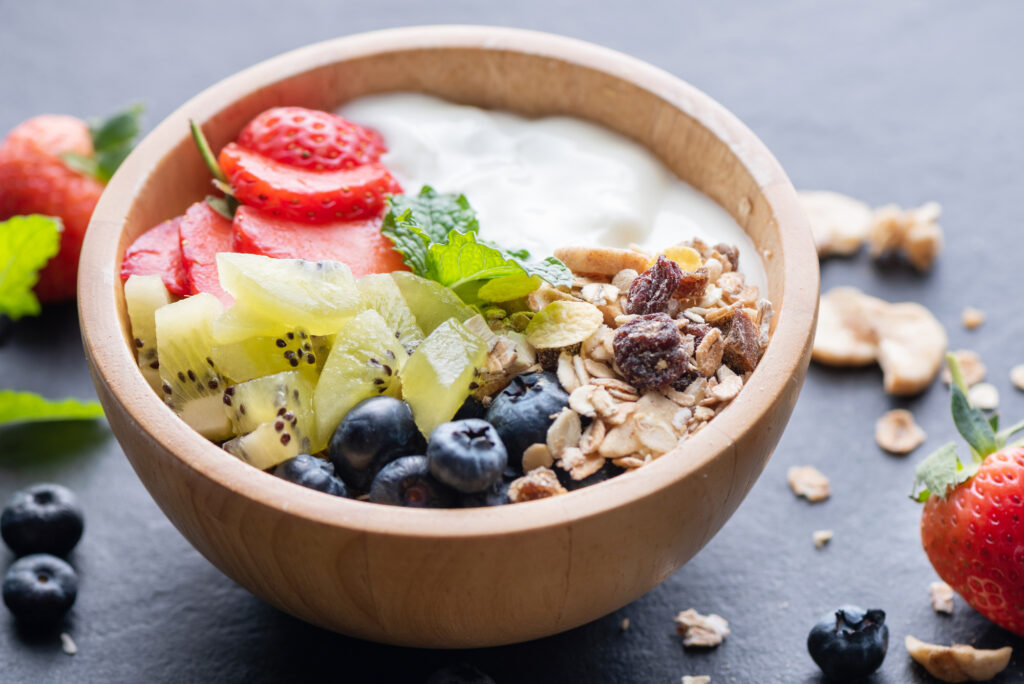
- Yogurt and kefir with live active cultures
- Sauerkraut and kimchi
- Miso and tempeh
- These foods introduce live beneficial bacteria directly, complementing the fiber that feeds bacteria already present in the gut.
Limit foods linked to reduced microbial diversity
- Highly processed foods low in fiber
- Excess refined sugar, which has also been tied to glycation and inflammation elsewhere on this site
- Diets consistently low in plant variety, since microbial diversity tends to reflect dietary diversity
A note on probiotics and supplements
Probiotic supplements are a reasonable addition for some people, but current evidence suggests whole food sources of fiber and fermented ingredients provide a stronger and more consistent foundation than supplementation alone. Supplements may help in specific situations, but they aren’t a substitute for a generally fiber-rich diet.
The bottom line
Gut health is unlikely to be a magic fix for skin aging on its own, but the inflammatory pathway it feeds into is one of the more credible and increasingly well-documented connections between diet and skin condition. Building a diet with consistent fiber and fermented foods is a low-risk, well-supported place to start, and it fits naturally alongside the other lifestyle factors we covered before.
Sources
- “Gut-Skin Axis: Current Knowledge of the Interrelationship between Gut and Skin.” https://pmc.ncbi.nlm.nih.gov/articles/PMC7916842/
- “Impact of Gut Microbiome on Skin Health.” https://pmc.ncbi.nlm.nih.gov/articles/PMC9311318/
- “The Gut-Skin Axis: A Bi-Directional, Microbiota-Driven Relationship.” https://pmc.ncbi.nlm.nih.gov/articles/PMC11901370/
- “Gut-Skin Axis: Unravelling the Connection Between the Gut Microbiome and Psoriasis.” https://pmc.ncbi.nlm.nih.gov/articles/PMC9138548/
- “Targeting Inflammation and Skin Aging via the Gut-Skin Axis.” https://pmc.ncbi.nlm.nih.gov/articles/PMC11676968/
- “Beauty From Within: A Comprehensive Review on the Interplay Between Gut Health and Skin.” https://cosmoderma.org/beauty-from-within-a-comprehensive-review-on-interplay-between-gut-health-and-skin/