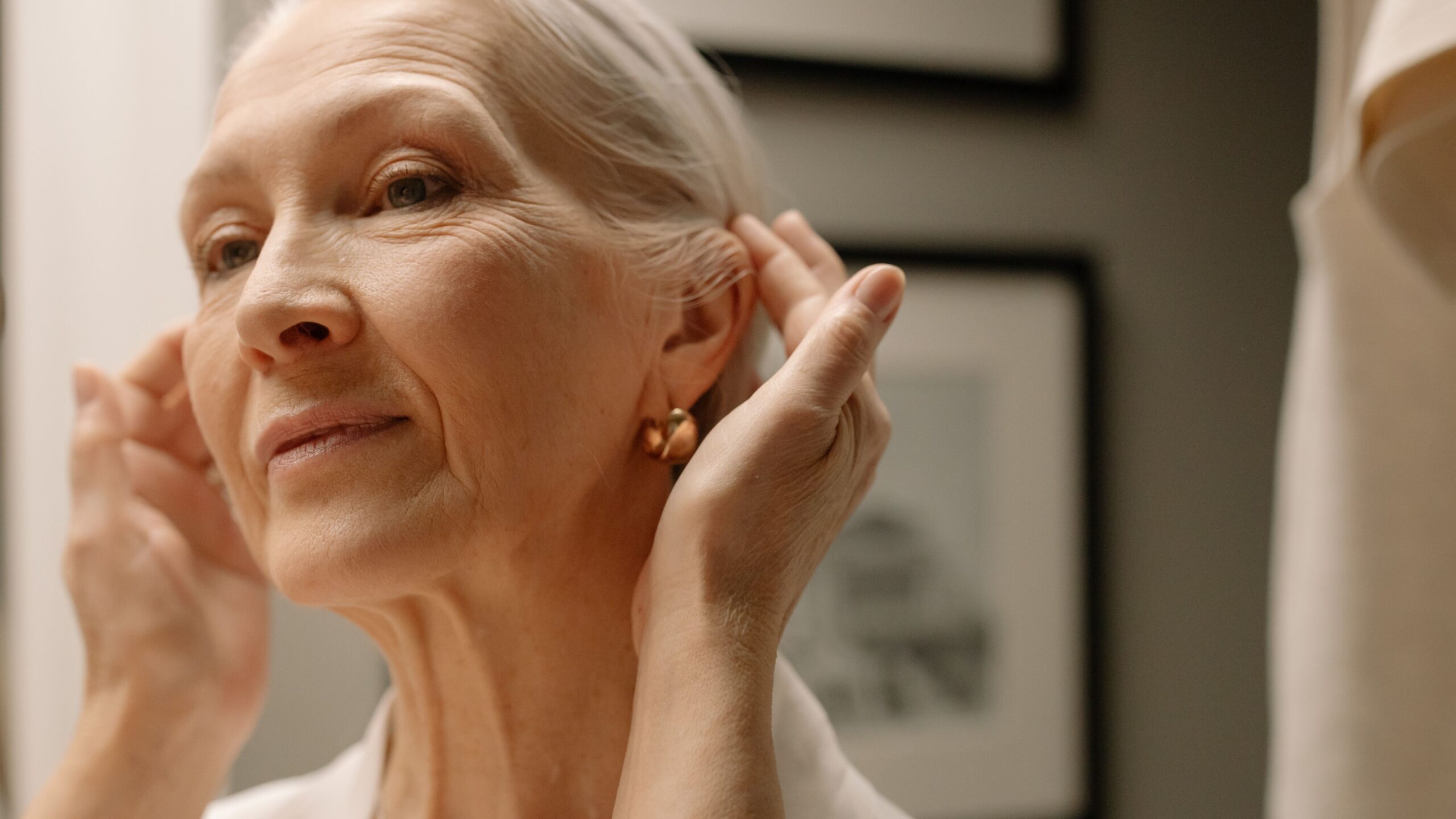
A familiar skincare routine can start to feel different in your 60s and 70s. Your face feels tight after washing, a light moisturizer no longer lasts through the day, or a favorite product starts to sting. Your hands and legs can become drier, too. These changes do not mean your skin has stopped responding to care. Often, you just need to adjust your routine.
The goal is comfort alongside visible improvement: less dryness, smoother texture, reliable protection, and treatments that match your concerns. This guide explains what changes, how to simplify daily care, where active ingredients and devices fit, and when to get a skin change checked.
What Changes—and Why Your Routine Feels Different
As skin ages, it generally becomes thinner, less elastic, and less oily. Collagen and elastin decline, and years of sun exposure contribute to wrinkles, pigmentation, and changes in texture. Medications and health conditions can also affect dryness and sensitivity.
The practical effects include:
- More dryness: Skin feels tight, rough, flaky, or itchy, particularly after bathing.
- Greater fragility: Minor knocks and friction cause bruises or small tears more easily.
- Slower recovery: Cuts and irritated areas take longer to settle.
- Uneven tone: Sun-related spots become more noticeable.
These changes vary from person to person. You do not need to replace everything because of your age. Start with what no longer feels comfortable or works well.
Build a Routine Around 3 Essentials
Before adding another serum, check whether cleansing, moisturizing, and sun protection are meeting your needs.
1. Cleanse without leaving skin tight
Choose a gentle, fragrance-free cleanser and use warm, not hot, water. Wash with your fingertips or a soft cloth instead of a rough brush. If morning cleansing leaves your face dry, try a lighter wash or a water rinse. In the evening, gently remove makeup and sunscreen.
For the body, keep baths or showers short. Hot water and excessive soap worsen dryness, especially on the legs and arms. A mild cleanser and regular moisturizer are practical starting points for managing dry, itchy skin.
“Unscented” isn’t always the same as “fragrance-free”: some products contain ingredients that mask odor. Look for the latter if fragrance irritates your skin.
2. Choose a moisturizer that lasts
If your face feels dry again an hour after applying lotion, try a richer cream. Very dry patches often benefit from an ointment, which provides a more protective layer. Apply moisturizer soon after bathing, while skin is slightly damp, and reapply to areas that need it.
A useful formula can combine:
- Glycerin to attract water.
- Ceramides to support the barrier.
- Petrolatum or similar ingredients to reduce moisture loss.
- Panthenol as another barrier-supportive option.
You do not need separate products for every ingredient. One comfortable moisturizer is more useful than several layers that irritate your skin.
3. Keep protecting against the sun
Sun protection remains worthwhile even when you already have visible sun damage. It helps prevent further discoloration and damage and reduces the risk of skin cancer.
Use broad-spectrum, water-resistant SPF 30 or higher on exposed areas. Add shade, a wide-brimmed hat, and protective clothing when practical. Reapply about every two hours outdoors and after swimming or sweating, as directed on the label. These sunscreen recommendations apply throughout adulthood.
Remember the ears, neck, chest, and backs of the hands too, not just the face.
A manageable daily routine
- Morning: Cleanse if needed, moisturize, and apply sunscreen.
- Evening: Remove makeup or sunscreen, cleanse gently, and moisturize.
- Body: Moisturize dry areas after bathing and hands after washing, as needed.
Once this feels comfortable, consider optional products for specific concerns.
Can You Still Use Active Ingredients?
Retinoids, vitamin C, and exfoliating acids can still be part of your routine. The important questions are what you want to improve and whether the product suits your skin.
Retinoids
Retinoids help with fine lines, texture, and uneven tone, but irritation is a common drawback. If you already have dryness, inflammation, or rosacea, consider this carefully when choosing a retinoid.
If you already use one comfortably, there is no reason to stop solely because you are over 60. If you are starting, introduce it gradually and avoid adding several strong products at once. Repeated soreness, cracking, or persistent peeling means it’s time to reassess the formula or frequency—not push through.
Vitamin C and exfoliation
Topical vitamin C is an optional step for antioxidant support and uneven tone. Exfoliating acids can address specific texture concerns, but you don’t need to exfoliate daily.
Let your skin settle before adding products to an already irritated routine. More activity is not automatically more benefit.
Clinic Treatments and Home Devices
A daily routine is the foundation, but you can also choose treatments for concerns that bother you. You’re not obligated to do so, and age alone doesn’t determine the best option.
Match clinic treatments to the concern
- Pigmentation: IPL, selected lasers, or peels can treat certain types of discoloration once the marks are identified.
- Texture and fine lines: Resurfacing improves skin quality, balancing treatment intensity with downtime.
- Mild laxity: RF or ultrasound can gradually improve skin in suitable patients, rather than requiring surgical lifting.
- Expression lines or volume loss: Neuromodulators and fillers address different concerns from skincare or resurfacing.
A discussion of treatments for mature skin highlights this distinction: surface treatments address texture and discoloration, while structural concerns require different approaches. Gentler procedures generally require less recovery time but may need more sessions.
Before booking, ask about expected results, healing time, aftercare, and how your medications and health history affect suitability. Have new or changing spots checked before new skin treatments.
Keep home-device expectations specific
LED therapy can gradually improve skin quality. Home RF targets mild firmness concerns, while microcurrent focuses more on the appearance of tone and definition. Results depend on the device, regular use, and the concern being treated.
Check the instructions for medical conditions, implanted devices, and other reasons the product is unsuitable. If your skin tears easily or is currently sore, inflamed, or injured, ask a dermatologist before using an energy-based tool.
Remember Your Hands, Arms, and Legs
These areas need care too, especially when dryness or fragility becomes noticeable.
- Wear gloves for gardening and housework.
- Moisturize dry hands after washing.
- Use soft fabrics and avoid vigorous rubbing.
- Protect exposed arms and hands outdoors.
- Avoid bath oils that make the tub slippery.
Keeping skin moisturized and protecting it from minor injury are central to caring for thin, fragile skin. Frequent tears deserve assessment, rather than simply accepting them as unavoidable.
When to Get a Change Checked
Talk with a clinician about persistent or severe itching, unexplained bruising, repeated tears, or a sore that won’t heal. Also seek evaluation for a new growth, bleeding spot, or mark that changes in size, shape, or color. These are not concerns to manage by repeatedly switching creams.
Routine adjustments can improve many everyday problems, while a medical assessment helps identify those that need a different solution.
Conclusion
Skincare in your 60s and 70s can remain simple and rewarding. Keep cleansing gentle, moisturize enough, protect against UV exposure, and choose optional treatments for specific goals. You can improve comfort and appearance without treating every sign of age as a problem to erase.
FAQs
Do I need products labeled “for mature skin”?
No. The label is less important than texture, ingredients, tolerability, and the concern you want to address. “Mature skin” is not a medical category.
Should I stop retinol after 60?
There is no automatic cutoff. Keep it if it suits your skin, and reassess if dryness or irritation becomes persistent. A dermatologist can help adjust treatment.
Is moisturizer enough, or do I need a skincare device?
Devices are optional. A basic routine supports comfort and protection; a device targets selected cosmetic goals. Decide based on what you want to improve, not because you feel your routine is incomplete.
Why does my skin still itch after moisturizing?
Dryness is only one explanation. Skin conditions, medications, and other health issues also cause itching. Persistent symptoms deserve evaluation, especially if they disrupt sleep or are accompanied by a rash.