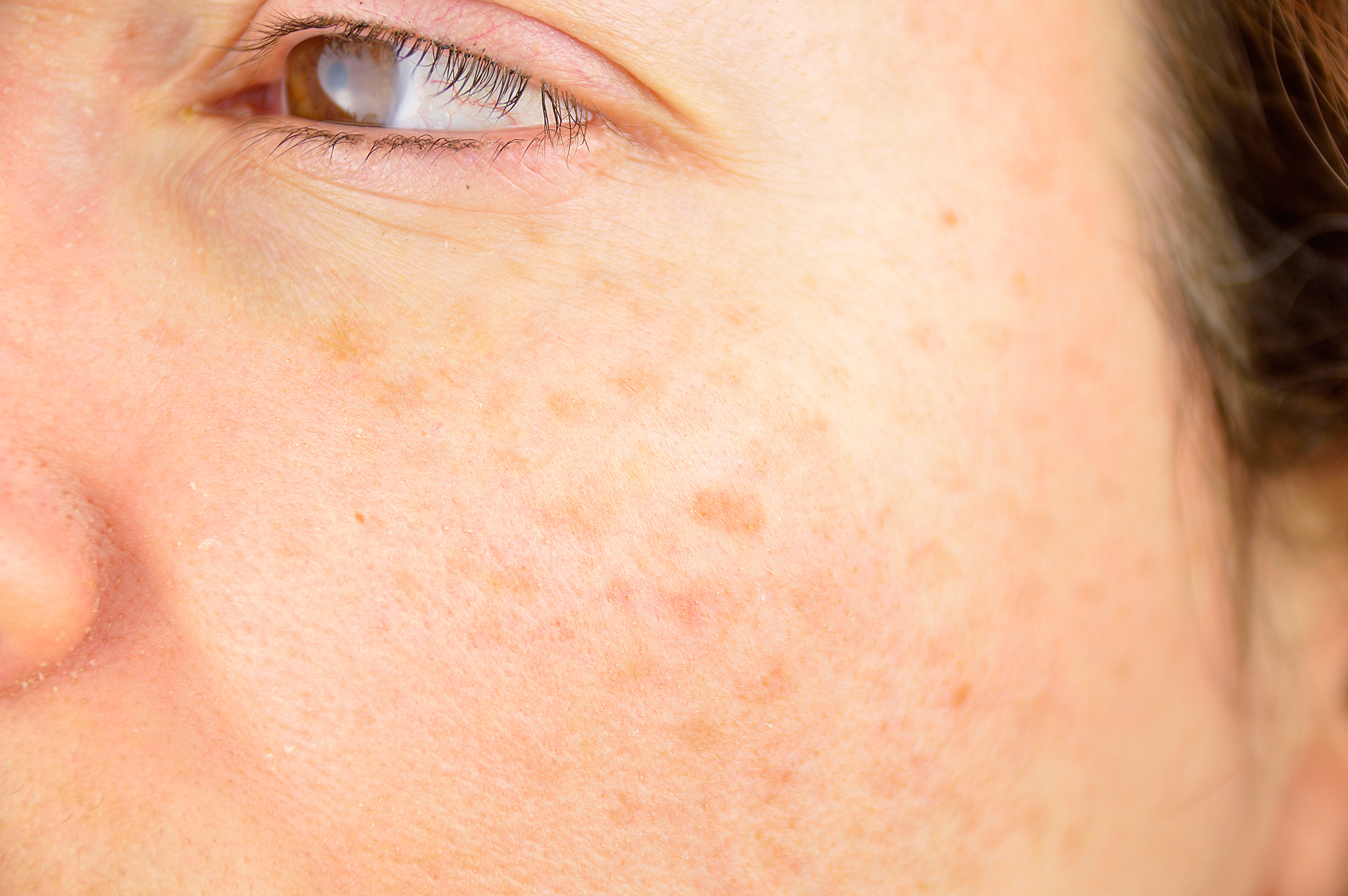
No, it’s not too late. Even after years of UV exposure, skin can respond to treatments that improve dark spots, wrinkles, uneven tone, and rough texture. While you can’t fully reverse every change, you can still see visible improvements at different stages of life. Just as importantly, protecting your skin from further UV exposure can help prevent existing damage from becoming more pronounced.
This guide explores what can realistically improve, what research tells us about treating established sun damage, and how daily sun protection can make a difference over time. It also covers treatment options for different skin concerns to help you find a practical starting point.
What Does Sun Damage Look Like?
Sun damage, also known as photoaging, refers to the cumulative changes that develop after repeated exposure to ultraviolet (UV) radiation. Rather than appearing as a single condition, it affects the skin in several ways, including:
- Dark spots and uneven pigmentation: Years of UV exposure can lead to sun spots, dark patches, and an uneven complexion.
- Fine lines and wrinkles: UV radiation breaks down collagen and elastin, contributing to wrinkles and a gradual loss of skin firmness.
- Rough or uneven texture: Changes in the skin’s structure can make the surface look less smooth and refined.
- Dull or uneven complexion: Accumulated sun exposure can contribute to sallowness, blotchiness, and an overall loss of radiance.
These changes do not necessarily develop at the same rate or respond to the same treatments. For example, someone primarily concerned about pigmentation and someone hoping to improve wrinkles or skin texture need separate evaluations and treatment routines. Identifying your main concern is therefore a useful first step.
Established Sun Damage Can Still Respond to Treatment
One of the most encouraging findings in photoaging research is that visibly sun-damaged skin can still improve, even when the changes have accumulated over many years.
A two-year randomized clinical trial involving 204 adults with moderate to severe facial photodamage investigated the effects of daily 0.05% tretinoin cream. Participants were assigned to use either the tretinoin formulation or an otherwise identical cream without the active ingredient.
After two years, the tretinoin group showed greater improvements in several visible signs of aging, including fine and coarse wrinkles, mottled pigmentation, sun spots, and sallowness. Their overall degree of photodamage was also rated more favorably than that of the comparison group.
These findings demonstrate that even long-established changes in the skin’s appearance are not necessarily permanent. With consistent treatment, some signs of accumulated UV exposure can become less noticeable.
Tretinoin did cause more skin irritation, particularly during the initial stages of treatment. Because it is a prescription-strength retinoid, these results may not apply equally to OTC retinol products. For a closer look at the differences between these ingredients, see our guide to retinol, retinal, and tretinoin.
Topical retinoids are not the only option. Dermatologists may also recommend chemical peels, laser treatments, or intense pulsed light (IPL) to address particular signs of photoaging. These procedures work in different ways and are selected according to the type and severity of the skin concern. A professional skin assessment can help determine the right approach.
Learn more about the options in the AAD’s guide to treating wrinkles and other signs of sun damage.
Daily Sunscreen Helps Prevent Further Skin Aging

Improving existing damage is only part of the whole picture. Preventing additional UV exposure matters just as much, especially when you are already working to improve your skin’s appearance.
A randomized clinical trial involving 903 adults under the age of 55 examined how regular sunscreen use affected skin aging over approximately four and a half years. Participants assigned to daily sunscreen application showed no detectable increase in skin aging during the study period. They also experienced less progression than those who used sunscreen at their discretion.
Researchers assessed changes in skin texture to measure aging progression. The results suggest that consistent sun protection can slow visible skin aging over time, even when participants aren’t using it as a corrective treatment.
For anyone with existing photoaging, sunscreen doesn’t erase established wrinkles or pigmentation, but it helps limit additional UV damage that could worsen them. It also helps protect the skin while you pursue other treatments.
Dermatologists recommend using a broad-spectrum, water-resistant sunscreen with SPF 30 or higher. When you’re outdoors, reapply it about every two hours. Additional protection from shade, hats, and protective clothing can further reduce exposure.
Remember, sun protection isn’t just for the face. The neck, chest, hands, and forearms are also frequently exposed and can show considerable signs of accumulated UV damage.
Where Should You Start? Match Your Main Concern
You don’t need to address every visible sign of photoaging at once. Identify the changes that bother you most and choose treatments accordingly. Here are a few starting points:
- Dark spots and uneven skin tone: Topical retinoids and dermatologist-administered treatments such as chemical peels, lasers, and IPL may help improve pigmentation and sun spots.
- Fine lines and wrinkles: Retinoids have demonstrated benefits for both fine and deeper wrinkles. More pronounced concerns may warrant a dermatologist’s assessment of additional treatment options.
- Rough or uneven texture: Certain topical treatments and professional resurfacing procedures can improve the skin’s appearance and smoothness.
- Thin, fragile skin and easy bruising: These concerns may involve age-related changes in addition to UV exposure. Gentle skin care, sun protection, and minimizing minor injuries are important. Read more in our guide to why skin thins and bruises with age and what can help.
One important consideration: not every dark spot is due to sun exposure. Ideally, a dermatologist should examine new, changing, or unusual spots before you try to treat them. A skin assessment can help rule out skin cancer and ensure that the chosen treatment is appropriate.
Conclusion
It’s never too late to start addressing the visible effects of years of sun exposure. Clinical research has shown improvements in wrinkles, pigmentation, and sun spots in people with established facial photodamage, and dermatologists can offer several additional treatments for different concerns. Whether your priority is fading dark spots, softening wrinkles, or smoothing uneven texture, there are options worth exploring.
And remember that the results of any corrective treatment are easier to maintain when you protect your skin consistently. Daily sunscreen may not undo the past, but it can make a meaningful difference to how your skin ages from here on.
FAQ
Can sun-damaged skin be repaired?
Some visible signs of photoaging can improve, although complete reversal isn’t currently possible. Clinical research has demonstrated improvements in wrinkles, mottled pigmentation, and sun spots following consistent tretinoin treatment. Other options, including chemical peels, lasers, and IPL, may also help depending on the type of damage.
Does sunscreen reverse existing sun damage?
No. Sunscreen does not directly reverse established wrinkles, pigmentation, or other visible changes. Its main role is to prevent additional UV damage. Research shows that consistent daily use can slow the progression of visible skin aging, making it an important part of any long-term skincare routine.
Is retinol as effective as tretinoin for sun-damaged skin?
Not necessarily. The clinical trial discussed above specifically investigated 0.05% tretinoin, a prescription-strength retinoid. Retinol is available in OTC skincare products and must be converted in the skin to become active. Because their strengths, formulations, and supporting clinical evidence differ, we shouldn’t assume they work the same way.
What treatments do dermatologists recommend for sun-damaged skin?
Common options may include prescription retinoids, chemical peels, laser treatments, and intense pulsed light (IPL). It depends largely on your main concern, such as pigmentation, wrinkles, or uneven texture, as well as your skin condition and suitability for treatment.