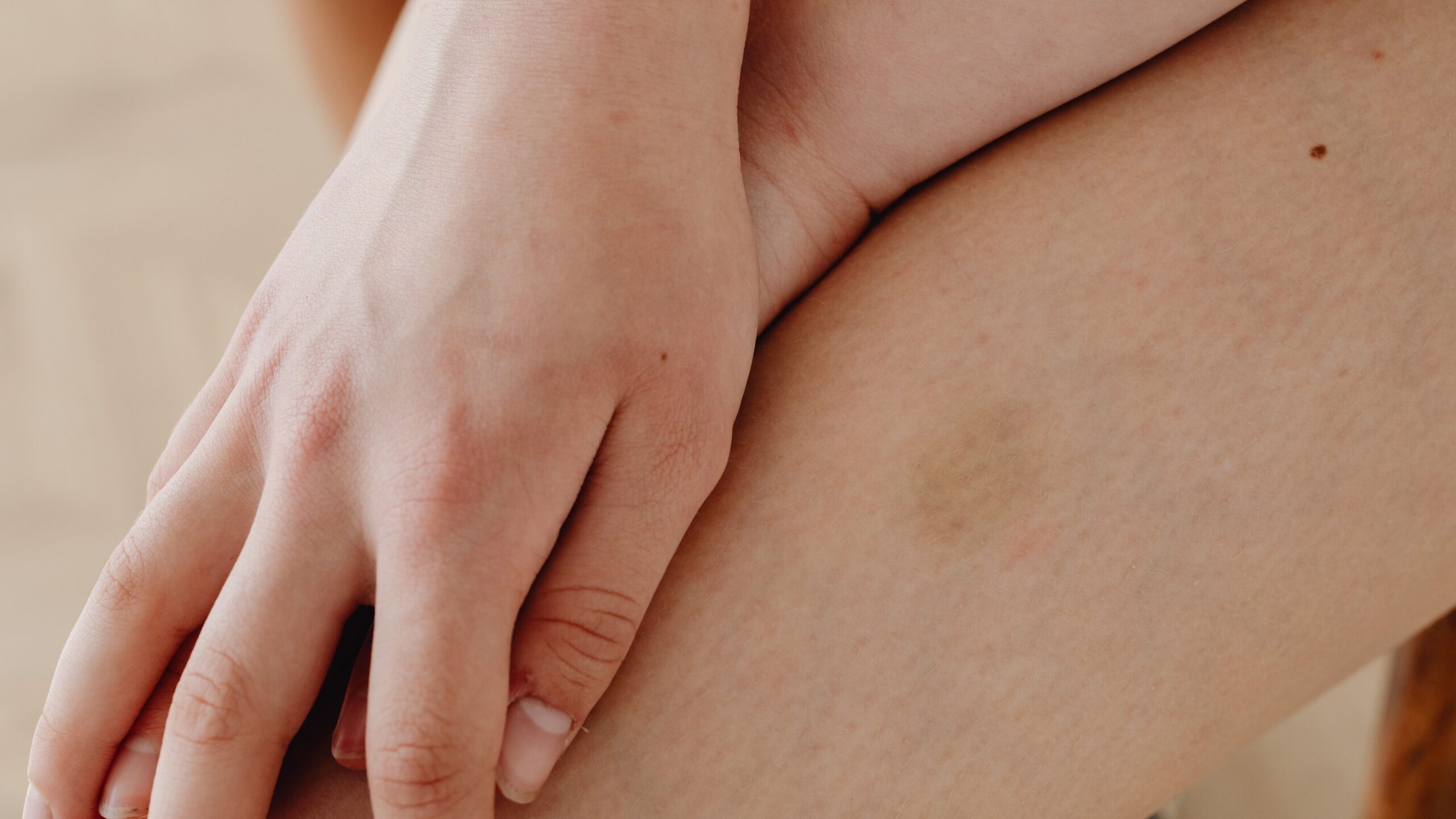
Skin becomes thinner and loses some of its cushioning with age, leaving small blood vessels less protected from bumps and pressure. Years of sun exposure add to this fragility, especially on the hands and forearms. That’s why an injury that once left little trace might now produce a noticeable purple mark. Certain medicines can also increase bruising by thinning the skin or affecting blood clotting.
Daily care centers on protection: keeping skin moisturized, limiting further sun damage, and reducing scrapes during ordinary activities. These steps support skin that’s become more delicate without requiring an elaborate routine. However, sudden or unexplained changes in bruising may need a medical assessment before you attribute them to aging alone.
Why Skin Becomes Thinner With Age
Skin gets its strength and flexibility from the tissue within and underneath it. The dermis, a deeper skin layer, contains collagen and elastic fibers. Fat below it cushions the skin and blood vessels against pressure. Aging changes these tissues, reducing the support around small vessels and making them more vulnerable to injury.
Age and years of sun exposure weaken the skin’s supporting tissue, leaving small blood vessels more vulnerable to injury. Even a slight bump may then cause bleeding under the skin, producing the purple patches known as
actinic purpura. These changes help explain both the delicate appearance of older skin and its tendency to bruise after minor contact.
A bruise forms when small blood vessels break, and blood escapes into nearby tissue. Thin skin doesn’t create the purple color itself; it leaves those vessels less protected. As the body breaks down and absorbs the escaped blood, the mark gradually fades.
Sun exposure contributes to the process over many years. The backs of the hands and outer forearms are common trouble spots because they’re frequently uncovered. Protecting them is still important after thinning develops, since continued exposure further damages already vulnerable skin.
What Purple Patches on the Hands and Forearms Mean
Flat, irregular purple patches on the hands or forearms are sometimes caused by actinic purpura, also called senile purpura. This common condition occurs in fragile, sun-damaged skin, often following minor contact that a person doesn’t remember. The surrounding skin typically looks thin and less elastic, with uneven pigmentation from sun exposure.
The patches generally fade within one to three weeks. They don’t always go through the blue, green, and yellow stages of a typical bruise. Some brown discoloration remains after the purple clears because pigment is left behind as the blood breaks down. New patches often appear later because the skin is still susceptible to injury.
Actinic purpura is considered benign once identified. However, if you notice a sudden increase in bruising, a change in where bruises appear, or bruising accompanied by unusual bleeding, schedule an appointment with a professional to take a closer look.
How Medicines Affect Bruising
Medicines contribute to bruising in different ways. Corticosteroids sometimes thin the skin, making it easier to injure. Anticoagulants and antiplatelet medicines affect clot formation, allowing a damaged vessel to bleed for longer before the bleeding stops. The resulting bruise might therefore be larger even if the skin itself hasn’t become thinner.
According to this article on medicines and easy bruising, contributors include:
- Anticoagulants, often called blood thinners.
- Antiplatelet medicines, including aspirin and clopidogrel.
- Pain relievers such as ibuprofen and naproxen.
- Corticosteroids.
- Certain supplements, including ginkgo biloba.
If bruising increases after a new medicine or supplement, contact your prescriber or pharmacist. Don’t stop prescribed treatment yourself. A review helps establish whether the medicine is contributing and whether an adjustment is appropriate.
How to Care for Thin, Easily Bruised Skin
A routine for fragile skin should address dryness, sun exposure, and physical injury.
Keep dry skin moisturized
Use a moisturizing cream regularly on dry areas, including the hands and forearms. Applying it while skin is slightly damp helps retain water, so apply it after washing or bathing, as suggested in this guidance on protecting thin skin.
Moisturizer improves hydration and temporarily smooths the appearance of dry skin. Those benefits help with comfort, but they aren’t the same as rebuilding the deeper tissue around blood vessels. A cream that makes skin look plumper hasn’t necessarily been shown to prevent bruises.
Cover areas exposed to scrapes
Long sleeves and long pants are particularly helpful during gardening, yardwork, or other activities involving repeated contact with rough materials. For forearms that injure easily, an additional layer offers extra protection. Choose clothing that allows comfortable movement and covers the areas you tend to knock. Reduce direct contact while keeping daily activities manageable.
Extend sun protection beyond the face
Hands and arms also need sun protection. Use a water-resistant, broad-spectrum sunscreen with SPF 30 or higher on exposed skin, alongside shade, protective clothing, and a wide-brimmed hat. Reapply sunscreen every two hours outdoors and more often when swimming or sweating. These habits limit further sun damage. For actinic purpura, the mark usually fades as the body clears the blood beneath the skin, while protection helps reduce additional injury.
Reduce avoidable bumps at home
Clear frequently used walkways, move electrical cords out of the way, and remove clutter or loose rugs that create trip hazards. Adequate lighting is especially important around stairs. Also mention dizziness or sleepiness during a medication review, since these effects increase the likelihood of falls and injuries.
When Bruising Needs Medical Attention
Arrange a medical review if you notice:
- Frequent large bruises without a clear cause.
- A sudden increase in how easily you bruise.
- Unexplained bruises on the chest, abdomen, back, or face.
- Bleeding that happens unusually easily or takes a long time to stop.
- Increased bruising after starting a medicine.
- A family history of unusual bleeding or easy bruising.
For diagnosed actinic purpura, the patches usually resolve without treatment, although they often recur. Long-term care focuses on protecting the surrounding skin from sunlight and minor trauma. Skin that repeatedly splits or tears needs extra examination.
An assessment usually includes questions about your health, medicines, and supplements, along with a physical examination. The purpose is to determine whether the bruising comes from fragile skin, a medicine, or another condition that needs care.
Conclusion
As skin loses support and cushioning, small blood vessels become easier to injure. Regular moisturizing, sun protection, and coverage during activities address different parts of that vulnerability. Keep the routine simple, but pay attention to changes: sudden bruising, unusual bleeding, or frequent skin tears call for an examination and advice suited to the cause.
FAQs
Why do I bruise without remembering a bump?
Fragile skin offers less protection to small blood vessels, so minor contact can sometimes cause a bruise. With actinic purpura, the injury often goes unnoticed. A new or increasingly frequent pattern of unexplained bruising still needs more assessment.
Why does a brown stain remain after a purple patch fades?
As blood breaks down, it leaves pigment in the surrounding tissue. In actinic purpura, this sometimes produces brown discoloration that lasts longer than the original purple patch.
Does easy bruising mean I need vitamins?
Easy bruising doesn’t suggest a vitamin deficiency. Aging skin and medications are recognized contributors, so new or unexplained bruising needs a cause assessment before choosing treatment. Include supplements in your medication review because some increase bruising risk.