Wrinkles aren’t the problem. They’re the result.
Most skincare targets what you can see — the wrinkles, the sag, the dullness. But all of those are downstream effects. The actual aging is happening at a cellular level, long before anything shows up in the mirror.
In 2013, researchers published a groundbreaking framework in the journal Cell identifying the distinct biological mechanisms, called hallmarks of aging, that drive deterioration in every living organism. In 2023, that framework was updated and expanded, and researchers have since mapped these hallmarks specifically onto skin. The result: a roadmap of exactly why skin ages, and where intervention is possible.
This article walks through the eight most important ones, in plain English.
Think of it like a building falling into disrepair
Imagine a well-built apartment block. Over decades, the foundation cracks slightly, the pipes corrode, the insulation degrades, and mold starts growing in the walls. Each problem feeds the others. Fix only the cracked paint and it still looks terrible, because the real issues are structural.
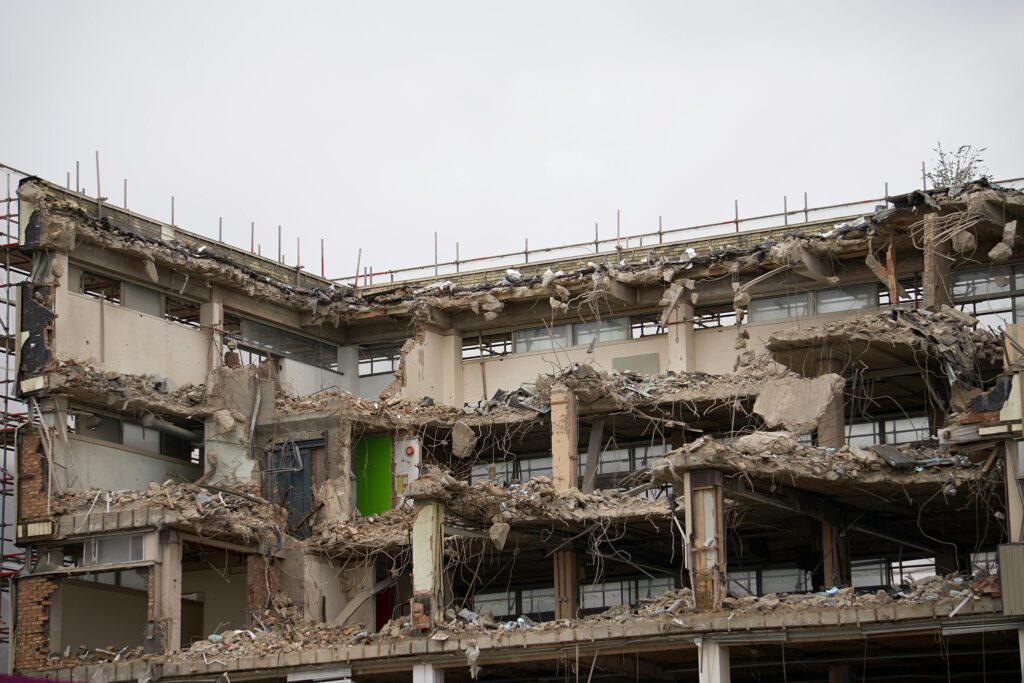
Skin aging works the same way. Each hallmark is a different structural problem happening simultaneously. Address one while ignoring the rest, and you’ll always be chasing surface symptoms. Address several at once, and you start getting results that actually last.
The 8 hallmarks & what they’re doing to your skin
1. DNA damage piling up
Every time your skin cells divide, which happens constantly, since the outer layer renews every few weeks, tiny errors and damage accumulate in their DNA. UV radiation is the biggest culprit, directly damaging DNA strands and overwhelming the cell’s repair machinery over time. Think of it as wear and tear on a photocopier: the more it’s used under stress, the more the copies degrade.
As this damage builds, cells become less functional, less able to produce collagen and maintain skin structure. Eventually, they stop working properly altogether.
What helps: Daily SPF slows this damage at the source. Retinoids help repair cells that have already accumulated damage by stimulating renewal pathways.
2. Telomeres wearing down
Every chromosome in your cells has protective caps on its ends called telomeres — think of the plastic tips on shoelaces. Each time a cell divides, those tips get slightly shorter. Once they wear down too far, the cell stops dividing and starts causing problems.
In skin, shorter telomeres mean fibroblasts (the cells that make collagen) divide less efficiently, epidermal stem cells lose their regenerative capacity, and the skin gradually thins and slows its ability to repair itself.
What helps: You can’t regrow telomeres, but you can slow how fast they shorten. Chronic stress, poor sleep, smoking, and UV exposure all accelerate telomere shortening, so managing these buys your skin cells more functional years.
3. Epigenetic patterns going haywire
Your DNA doesn’t change as you age, but the way your cells read it does. Every cell has a control system of chemical tags that decide which genes are switched on and which stay off. With age, this system becomes disorganized.
The result: genes that keep skin healthy and youthful go quiet, while genes associated with inflammation and degradation get switched on. It’s less like a mutation and more like an orchestra where everyone slowly starts playing from the wrong sheet music.
What helps: Methylation-supportive foods — leafy greens, eggs, cruciferous vegetables, B vitamins — directly feed the biochemical machinery that maintains these patterns. This is one of the key reasons the dietary approach in the lifestyle study from Blog 1 produced measurable age reversal.
4. Cells forgetting to take out the trash
Every cell is constantly producing proteins, and constantly accumulating damaged, misfolded ones that need to be disposed of. In young skin, the cell’s waste disposal system runs efficiently. In aging skin, it slows down, and damaged proteins pile up inside cells like a bin that never gets emptied.
This impairs how cells function, interferes with collagen production, and accelerates deterioration from the inside out.
What helps: Autophagy — the cell’s self-cleaning process — is activated by exercise, intermittent fasting, and foods rich in spermidine (found in wheat germ, aged cheese, and mushrooms). These aren’t exotic interventions; they’re accessible habits with meaningful cellular effects.
5. Energy production declining
Your skin cells run on energy produced by mitochondria — tiny engines inside each cell. With age, these engines become less efficient and start leaking damaging byproducts called free radicals (technically, reactive oxygen species).
More free radicals mean more damage to DNA, proteins, and the collagen scaffold. The cells that are supposed to maintain your skin structure can’t keep up with the repair work. This is why antioxidants aren’t just a marketing buzzword. They’re directly addressing a real cellular problem.
What helps: Antioxidant-rich foods (berries, leafy greens, vitamin C) and topicals (vitamin C serum, niacinamide) help neutralize free radicals.
6. Zombie cells taking over
This is arguably the most important hallmark to understand, and the most exciting from a reversal standpoint.
When a skin cell accumulates too much damage to keep working properly, it hits a kind of emergency brake. It stops dividing, but it also doesn’t die. It just sits there. Researchers call these senescent cells, but the more evocative nickname is zombie cells: they’re not alive in the functional sense, but they won’t go away.
Worse, they’re actively disruptive. Senescent cells pump out a stream of inflammatory signals and enzymes that break down collagen, damage neighboring healthy cells, and even turn surrounding cells into more zombie cells, spreading dysfunction through the tissue like a slow infection.
In young skin, the immune system clears these cells as they appear. With age, that clearance slows, and zombie cells accumulate, particularly in the dermis, directly degrading collagen structure.
The reversal potential here is genuinely exciting. A 2023 study found that clearing senescent cells from aged human skin tissue produced a 30% increase in collagen density and a 60% reduction in senescence markers. A 2022 study confirmed similar results — more collagen, thicker epidermis, better skin renewal — in animal models after senescent cell clearance.
Clinical senolytics (drugs that target zombie cells) aren’t available for consumer use yet. But accessible strategies already reduce their burden:
- Retinoids accelerate clearance of dysfunctional cells
- Exercise reduces inflammatory signals from senescent cells system-wide
- Senotherapeutic peptides — a new research area — reduced biological skin age in lab models in a 2023 npj Aging study
7. Skin stem cells burning out
Your skin has its own reservoir of stem cells that maintain the barrier, fuel renewal, and heal wounds. Like all cells, they accumulate damage over time — and their ability to generate healthy new skin gradually diminishes.
This is why older skin heals more slowly, thins over time, and loses its ability to bounce back after stress. It’s not just collagen loss — it’s the loss of the cells responsible for making new collagen in the first place.
What helps: Growth factors and exosomes work by signaling to these stem cells and partially restoring their activity. This is one of the most promising frontiers in anti-aging research right now.
8. Chronic low-grade inflammation (inflammaging)
The final hallmark ties everything together. As zombie cells accumulate, as mitochondria leak free radicals, and as the collagen scaffold degrades, the skin enters a state of chronic, low-grade inflammation that researchers have dubbed inflammaging.
This inflammation isn’t the acute kind you see in a wound — it’s quieter, slower, and far more destructive over time. It keeps degradation enzymes overactive, breaks down the extracellular matrix faster than it can be replaced, and impairs the communication between skin cells that’s necessary for normal function.
What helps: Consistent sleep, stress management, and an anti-inflammatory diet (omega-3 rich foods, limited processed sugar, plenty of vegetables) are the foundation. Topically, niacinamide and certain peptides reduce inflammatory signaling in aging skin. Professional treatments like RF and microneedling work in part by triggering controlled healing that resets these pathways.
How the hallmarks connect
These mechanisms don’t happen in isolation. DNA damage triggers zombie cells. Zombie cells drive inflammation. Inflammation damages mitochondria. Mitochondrial dysfunction produces more free radicals, which cause more DNA damage. Around and around.
This is why a single-ingredient approach rarely moves the needle much — you’re addressing one thread in a tightly woven system. The most effective strategies work on multiple hallmarks simultaneously: a retinoid addresses DNA damage and zombie cells; a low-glycemic anti-inflammatory diet addresses nutrient sensing, mitochondria, and inflammation together; consistent sleep and exercise touch almost all of them.
| Hallmark | Plain-English Summary | Key Interventions |
|---|---|---|
| DNA damage | Cells break down faster than they repair | SPF daily, retinoids, antioxidants |
| Telomere shortening | Cells lose their ability to divide and renew | Reduce stress, sleep, avoid smoking |
| Epigenetic dysregulation | Cells forget how to behave young | Methylation-supportive diet, B vitamins |
| Proteostasis loss | Cellular waste piles up | Intermittent fasting, exercise, spermidine |
| Mitochondrial decline | Energy drops; free radical damage rises | Antioxidants, niacinamide, NMN |
| Cellular senescence | Zombie cells degrade collagen and spread damage | Retinoids, exercise, peptides |
| Stem cell exhaustion | Skin renewal and healing slow significantly | Growth factors, exosomes, microneedling |
| Inflammaging | Chronic inflammation accelerates all other damage | Anti-inflammatory diet, sleep, niacinamide |
Bottom line
Skin aging isn’t one thing. It’s eight distinct mechanisms reinforcing each other. The good news is that most of them respond to interventions that are already accessible: SPF, retinoids, antioxidants, sleep, diet, and stress management. Understanding what’s actually driving your skin’s decline makes every decision — from what you eat to what you apply — more purposeful and more effective.
Sources
- “The Hallmarks of Aging.” https://pubmed.ncbi.nlm.nih.gov/23746838/
- “Hallmarks of Aging: An Expanding Universe.” https://pubmed.ncbi.nlm.nih.gov/36599349/
- “Hallmarks of Skin Aging: Update.” https://pmc.ncbi.nlm.nih.gov/articles/PMC10676801/
- “Senolytic Agent Rejuvenates Aged Human Skin.” https://www.nad.com/news/navitoclax-rejuvenates-aged-human-skin
- “Attenuation of intrinsic ageing of the skin via elimination of senescent dermal fibroblasts with senolytic drugs.” https://pubmed.ncbi.nlm.nih.gov/35274377/
- “Skin aging from mechanisms to interventions.” https://pubmed.ncbi.nlm.nih.gov/37234413/
- “Senotherapeutic peptide treatment reduces biological age and senescence burden in human skin models.” https://www.nature.com/articles/s41514-023-00109-1
- “Improvement of Naturally Aged Skin with Vitamin A (Retinol).” https://jamanetwork.com/journals/jamadermatology/fullarticle/412795
- “NMN Outperforms NR and Other NAD+ Precursors in Skin Cells.” https://renuebyscience.com/blogs/scientific-evidence-library/nmn-outperforms-nr-and-other-nad-precursors-in-skin-cells
- “NAD⁺ supplementation for anti-aging and wellness: A systematic review.” https://pubmed.ncbi.nlm.nih.gov/41655607/