Key Takeaways
- Sugar’s damage pathway is well-documented: elevated blood glucose links directly to higher perceived facial age through glycation.
- Alcohol’s connection to visible wrinkling is less clear-cut than commonly assumed, though it affects skin through other pathways.
- Alcohol is more strongly tied to facial volume loss, dehydration, and accelerated biological aging markers than to wrinkles specifically.
- Combining both, through sugary alcoholic drinks, appears to be the more damaging scenario than either alone.
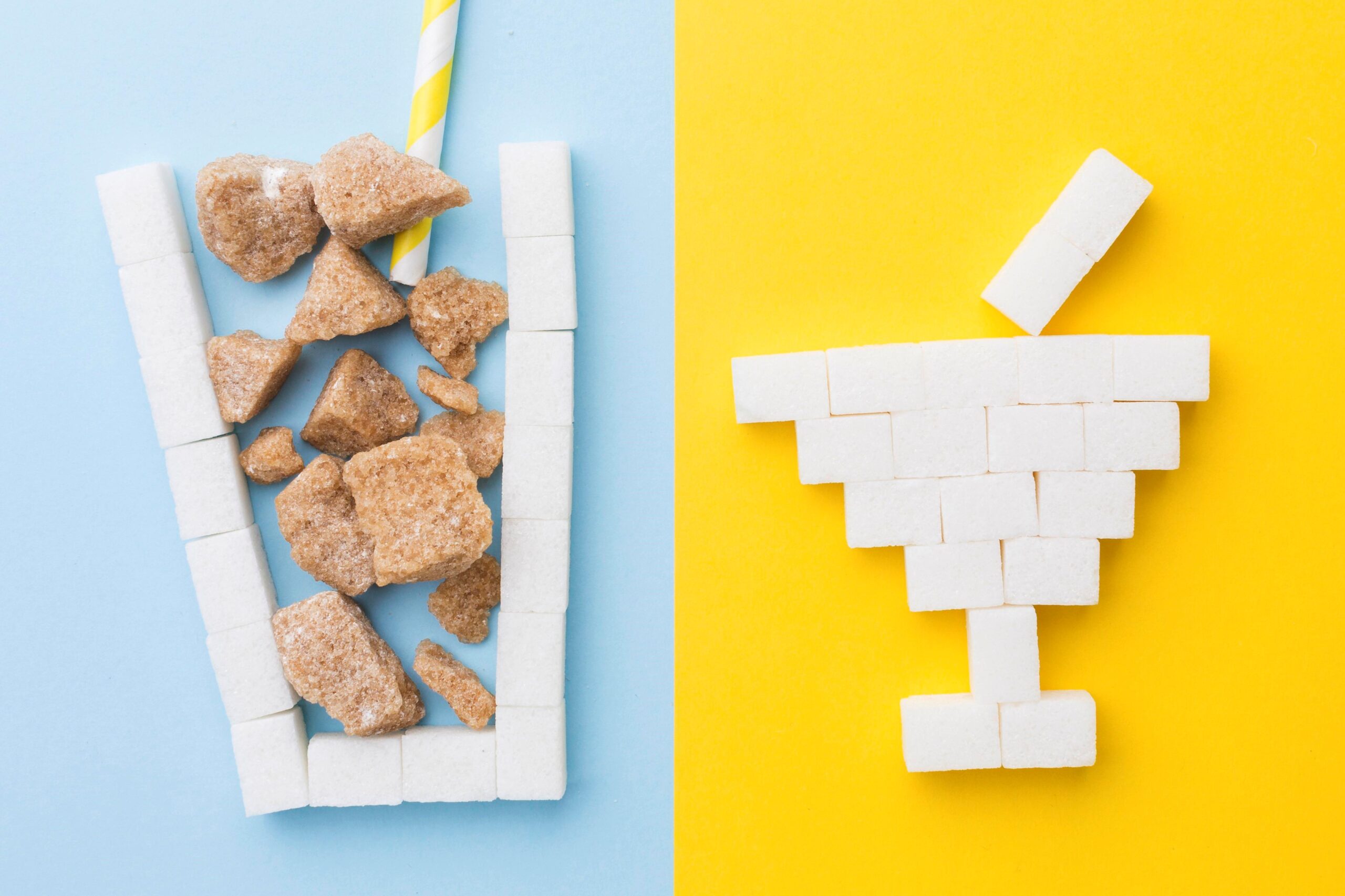
Sugar and alcohol both get blamed for aging skin, often in the same breath. But they don’t work the same way. And the evidence behind each claim isn’t equally strong. One has a clear, well-mapped mechanism. The other is more complicated than most people believe.
Sugar’s Damage Pathway, Explained
Sugar’s effect on skin comes down to a process called glycation. When blood sugar stays elevated, sugar molecules attach to collagen and elastin fibers. This forms rigid bonds called advanced glycation end-products, or AGEs. These bonds stiffen skin. They also make it less elastic over time.
This connection has strong research support. One study found that higher blood glucose levels correlated directly with a higher perceived facial age. This held true independent of a person’s actual age. Collagen turns over slowly, so this kind of damage builds gradually. It doesn’t reset quickly. That’s part of why the effect compounds over years rather than showing up overnight.
The Research on Alcohol and Wrinkles
Alcohol is widely assumed to cause wrinkles. But a closer look at the published research tells a murkier story. Several studies examining alcohol consumption and skin wrinkling found no consistent, strong link between the two. A few even showed a slight reduction in certain wrinkle measures among moderate drinkers.
This doesn’t mean alcohol is harmless for skin. It means the specific claim “alcohol causes wrinkles” isn’t as settled as it’s often presented. Much of the research in this area is limited by small sample sizes and inconsistent methods. That makes broad claims harder to support than they might sound in a headline. It’s a useful reminder that popular skincare claims don’t always hold up once you trace them back to the original studies.
Alcohol’s Damage Shows Up Somewhere Else
Instead of wrinkles specifically, alcohol’s more clearly documented effects on skin show up elsewhere. A large study on facial aging found that alcohol consumption significantly affects age-related volume loss in the face. It also affects overall skin quality, separate from wrinkle formation.
This tracks with alcohol’s dehydrating and inflammatory effects on skin. Alcohol pulls moisture from the body. It disrupts nutrient absorption needed for collagen production. It also triggers inflammation that can worsen existing skin conditions. These changes are real. They just aren’t the same thing as the classic “wrinkle” claim most people assume when they hear alcohol ages your skin.
The Biological Aging Angle Most People Miss
There’s a deeper layer to this too. A genetic study from Oxford researchers found that alcohol consumption directly correlates with accelerated biological aging. Researchers measured this using markers like telomere length, one of the cellular hallmarks of aging.
This suggests alcohol’s aging effect may operate more at a cellular and systemic level. It’s a different kind of damage than glycation, working through a separate biological pathway entirely. Someone could have relatively smooth-looking skin while still experiencing accelerated aging beneath the surface. Visible signs don’t always tell the full story.
Comparing Sugar and Alcohol
Laid out directly, the two habits affect skin in distinct ways:
- Sugar damages skin primarily through glycation, linking blood sugar levels to collagen stiffening and higher perceived age.
- Alcohol affects skin more through dehydration, inflammation, and facial volume loss. Its link to wrinkling specifically is weaker and more inconsistent.
- Sugar’s evidence base is more mechanistically clear and consistent across studies.
- Alcohol’s evidence base is broader but more mixed, especially regarding visible wrinkles.
Neither habit is harmless. But they aren’t interchangeable villains working the same way. That matters if you’re trying to prioritize where to make changes first.
The Worst-Case Scenario: Combining Both
If there’s a clear worst offender, it’s not sugar or alcohol alone. It’s the combination found in sugary alcoholic drinks: cocktails, sweet wine, and beer. These deliver both mechanisms at once. The sugar content triggers glycation. The alcohol causes dehydration and inflammation at the same time.
This combination is worth paying attention to. Most people aren’t consuming sugar and alcohol in isolation anyway. A sweet cocktail delivers a fast glucose spike alongside alcohol’s diuretic effect. Your skin ends up dealing with a glycation trigger and a dehydration hit within the same hour. Over time, this layered exposure may explain why heavy drinkers who also favor sugary mixers often show more pronounced skin changes than those who choose drier options.
The Bottom Line
Not every “this ages your skin” claim carries the same scientific weight. Sugar’s link to skin aging through glycation is well-supported and clear. Alcohol’s damage is real, but it shows up differently than most people expect. It works through dehydration, inflammation, and cellular aging rather than wrinkles alone. Understanding which mechanism you’re dealing with matters more than treating every habit as equally responsible for the same outcome.
Q&A
Does moderate drinking really not affect skin?
Moderate drinking appears to have a weaker link to wrinkles than commonly assumed. It still affects hydration, facial volume, and inflammation over time.
Is sugar worse for skin than alcohol overall?
Sugar has a clearer, more direct mechanism tied to collagen damage. Alcohol contributes to skin aging through other pathways that shouldn’t be dismissed.
What’s the single biggest dietary factor in skin aging?
Chronically elevated blood sugar has some of the strongest, most consistent research behind it as a direct driver of visible skin aging.
Does switching to sugar-free alcoholic drinks make a difference to the skin?
Choosing drier, lower-sugar options like dry wine or spirits without sweet mixers can reduce the glycation-related portion of alcohol’s impact. The dehydration and inflammation effects still remain.
Sources
- “Beverage Consumption and Facial Skin Aging: Evidence from Mendelian randomization analysis” Journal of Cosmetic Dermatology, 2024. https://onlinelibrary.wiley.com/doi/full/10.1111/jocd.16153
- “Impact of Smoking and Alcohol Use on Facial Aging in Women.” The Journal of clinical and aesthetic dermatology, 2019. https://pmc.ncbi.nlm.nih.gov/articles/PMC6715121/
- “Genetic study provides new evidence that alcohol accelerates biological ageing” Oxford Population Health (NDPH), 2022. https://www.ndph.ox.ac.uk/news/genetic-study-provides-new-evidence-that-alcohol-accelerates-biological-aging
- “How Alcohol & Sugar Affect Your Skin and Aging Process.” Greenspring Aesthetics, 2025. https://greenspringaesthetics.com/how-alcohol-sugar-affect-your-skin-and-aging-process/